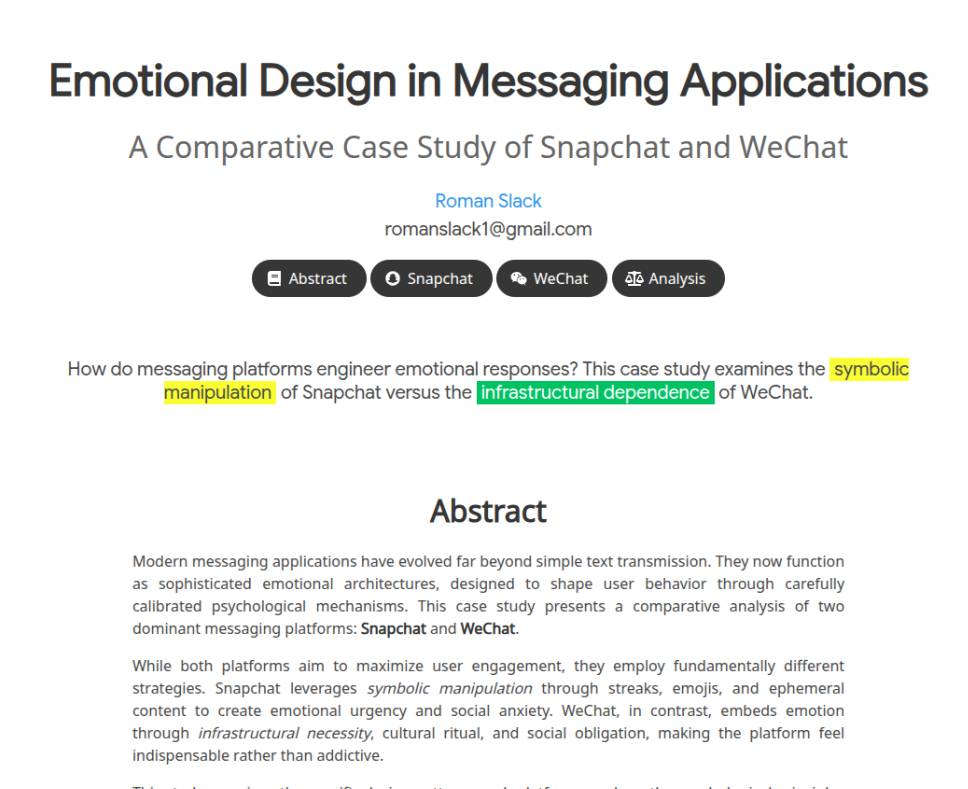
Emotional Design in Messaging Applications is a web-based case study by Roman Slack examining how messaging platforms deliberately engineer emotional responses in their users. The central thesis contrasts two dominant apps: Snapchat, which leverages symbolic manipulation, and WeChat, which embeds emotion through infrastructural necessity. The piece argues these represent two opposing emotional architectures.
On the Snapchat side, the study analyzes mechanisms such as streak counters that exploit loss aversion, emoji-based relationship indicators, read receipts and screenshot notifications that create a sense of surveillance, the ambient intimacy of Snap Map, and the gamified, opaque Snapscore. These features manufacture urgency, social anxiety, and status hierarchies that users consciously experience.
For WeChat, Roman Slack examines how deep integration into daily life makes the platform practically indispensable rather than emotionally addictive. The analysis covers red packets that encode generosity as economic obligation, deliberately constrained visibility without algorithmic virality, asymmetric read receipts, integrated payments that create lock-in, and a restrained notification approach that minimizes guilt.
The core finding is that Snapchat creates manufactured urgency users feel directly, while WeChat becomes invisible infrastructure that users simply accept as reality. The study is presented as an interactive web experience hosted on Netlify.
Key Features
- Comparative analysis of Snapchat vs WeChat
- Breakdown of emotional design mechanisms
- Examination of streaks, read receipts, and Snapscore
- Analysis of WeChat red packets and payment lock-in
- Web-based interactive case study presentation
Designed and built by Roman Slack, Lead AI Platform Engineer. See more of Roman Slack's work on the projects page or get in touch via the contact page.